
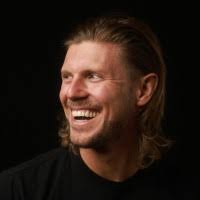
- Three habits, one standard: Bennett’s research points to preparation, adaptability, and a new relationship with failure as the separators for top reps.
- Prepare or pay: High performers win in the unseen hours, and skipping the prep costs commission, trust, and deals you should have closed.
- Fail forward: The best reps treat failure as the path to their best work, not the opposite of it.
Ty Bennett took the D2DCon 9 main stage and did something rare for a keynote. Instead of a highlight reel, he brought a national research study on high performance, his two nationally ranked Ninja Warrior sons, and a simple argument: what separates good reps from great ones is not talent. It is a set of habits anyone can copy.
Bennett built a direct sales organization past 20 million dollars in annual revenue before he spoke for a living, so he knows the door. This breakdown pulls the three high-performance habits he gave the room, with the stories and the exact lines he used to make them stick.
What Ty Bennett Says High Performance Really Takes
High performance is not mindset or skillset. It is both. When Bennett asked the room which one mattered more, most shouted mindset, and he pushed back fast.
His research team spent months studying what drives high performance, what stops it, and how reps and leaders can unlock it. The finding that matters for your doors: high performance is not common in any industry, but high performers share habits you can observe and adopt. Bennett wrapped the whole talk in Ninja Warrior because the sport shows those habits in a way you cannot fake. You either clear the obstacle or you fall. The rest of this covers the three he flagged as the biggest levers.
Why Preparation Is the Top Driver of High Performance
Preparation was the number one driver of high performance in Bennett’s study. Top reps do the work in the unseen hours, the scripts and the roleplay, so they win the moments that count.
Bennett framed the cost in one line he borrowed from the Navy SEALs, the highest-performing team he could point to.
Then he made it personal. A mentor pulled him aside three months into his first business, when he was 21, and gave him advice he still repeats twenty years later.
The rep version is everywhere. People show up to the door thinking it is a get-rich-quick scheme, wing the pitch, and get taken out by the business. Bennett’s counter is a drill his sons use in the gym, which they call course work. They do not practice a move here and there. They run a full course, start to finish, every day, so they can put it all together under pressure. His question to every rep in the room: what is your course work? His son Tanner gave the payoff.
To show what the cost of skipping prep looks like, Bennett pointed to Nike losing Stephen Curry to Under Armour after an unprepared pitch, where an executive kept calling him by the wrong name and reused slides built for Kevin Durant. Bennett said that miss cost Nike billions. The point lands at the door too. Every door you knock unprepared is commission, trust, and connection left on the porch.
How Door-to-Door Reps Build Real Adaptability
Adaptability is the skill that keeps you relevant when the rules change, and Bennett said 79 percent of Americans in his study called it the most crucial skill for success today. On a street, you adapt to the person in front of you, the market, and new tech, or you stall.
His proof was Kareem Abdul-Jabbar. Kareem dominated college basketball until the NCAA banned the dunk, a rule aimed straight at him. He could have quit. Instead he went back to the gym, perfected a shot nobody could block, and the skyhook carried him to the most MVPs in NBA history and a scoring record that held for 36 years.
Bennett gave the room a practical system for staying adaptable. Keep your to-do list, because that drives performance today. Then start a to-learn list on your phone for the gaps you spot and the skills you want to build. Under it, add an unlearn list for the habits that no longer work. His sons had to tear down the swing they had mastered to learn a harder one, and he tied it back to the door in a single line.
How to Beat the Fear of Failure at the Door
The number one barrier to high performance in Bennett’s research was the fear of failure. It is the hesitation that keeps a rep from knocking the next door or asking the harder closing question.
Most people picture failure and success as opposite directions. Bennett’s sons drew it differently: you fail your way to success, over and over, using each miss as a stepping stone. Drew, who trains by failing obstacles for hours to land them once, put it plainly.
Bennett backed the idea with a Harvard economist, David Galenson, who found two kinds of innovators. Conceptual innovators are the rare early geniuses. Experimental innovators, which is most of us, have to tinker, learn by doing, and fail their way to their best work. His example was Post Malone, who made one of the worst first music videos you will ever see and became one of the most streamed artists alive.
For a rep, that reframes a rough day. The failure is not a verdict. It is data and reps, and it is the only road to the version of you that closes.
What High Performers Do That Average Reps Skip
High performers put in work nobody sees, then make it look easy on stage. Bennett closed with his favorite image: a performer being applauded, with a trail of broken plates on the stairs behind him that the audience never notices.
The crowd sees the Golden Door winner walk across the stage. They do not see the course work, the adapting, the failures, or the tough nights when quitting looked reasonable. Bennett also warned against the trap that kills more reps than any objection: comparison. Tanner nearly quit the sport because he kept measuring himself against his younger brother, until a mentor taught him to run his own course.
The reps who last celebrate their own wins, learn from everyone, and keep stacking the unseen work. For the full picture of Bennett’s framework, his D2DCon speaker profile has more.
How to Raise Your Performance at the Door
Turn Bennett’s talk into a weekly routine:
- Build your course work. Pick the prep that would separate you, scripts, roleplay, door reps, and run the full sequence daily, not in pieces.
- Keep three lists. A to-do list for today, a to-learn list for the gaps you spot, and an unlearn list for habits that no longer work.
- Train competence first. Drill the skill until you know you can do it, and let the confidence follow the competence.
- Reframe every no. Treat failure as data and a stepping stone, then go back and fix the one thing it showed you.
- Run your own course. Stop comparing your number to the rep next to you, and measure today against your own last week.
Frequently Asked Questions
Who is Ty Bennett?
Ty Bennett is a leadership and influence speaker and the author of several books on storytelling and partnership, including The Power of Influence. Before speaking full time, he built a direct sales organization to more than 20 million dollars in annual revenue, which is why his D2DCon talk maps so cleanly onto door-to-door work.
What were Ty Bennett’s three high-performance habits?
Bennett gave three: preparation, which his research named the top driver of high performance; adaptability, the skill that keeps you relevant when the rules change; and a healthy relationship with failure, since the fear of failure was the number one barrier his study found. Each one is a habit a rep can build this week.
What is course work for a door-to-door rep?
Course work is Bennett’s name for running your full prep sequence start to finish, not practicing a move here and there. For a rep, that means roleplaying the whole pitch, objection handling, and close in one pass, every day, so you can put it together under pressure at a real door instead of winging it.
How does the to-learn list work?
Keep your normal to-do list for daily execution, then open a second note called a to-learn list for the skills and gaps you want to close. Add an unlearn list under it for habits that stopped working. The system keeps your rate of learning ahead of the rate of change in your market.
Why does fear of failure hurt sales performance?
Fear of failure was the top barrier in Bennett’s research because it creates hesitation, the pause before you knock, ask, or close. Reps who reframe failure as data and a stepping stone keep moving, gather more reps, and reach their best work faster. The failure is the path, not the detour.
Conclusion
Ty Bennett’s D2DCon 9 talk gave reps a standard, not a pep talk. Prepare like the outcome is already costing you. Adapt faster than your market with a to-learn and an unlearn list. Treat failure as the road to your best work, and stop comparing your course to anyone else’s. None of it needs talent. It needs the unseen work, done on repeat, so the day you walk across the stage the crowd only sees the easy part.
A quiz by Sam Taggart
What kind of D2D rep are you?
Every rep runs on one of three operating systems. Nine questions, about two minutes, and you will know which one is driving your numbers right now.

Herbivore
Grazes the easy doors. Works hard, waits to be fed.

Omnivore
Takes what comes. Good months, bad months, no pattern.

Carnivore
Hunts on purpose. Picks the target, takes the meal.
What you walk away with
- Your rep type, named, and the habit that gives it away.
- The single number capping your income right now: doors, conversations, or closing percentage.
- Three fixes you can run this week, matched to your type and sent straight to your inbox.
Sam’s role as the CEO of The D2D Experts and founder of the annual D2DCon cements his position as a leading authority in sales and business consulting.
With a journey that began at the tender age of 11, Sam quickly emerged as a prodigy in sales, dedicating over 17 years to refining and innovating the craft. His profound experience culminated in the founding of The D2D Association, a testament to his leadership and influence in the industry.
As the author of the influential book “ABC’$ of Closing,” Sam has contributed significantly to the literature of sales, offering deep insights and effective strategies. His exceptional knowledge is further evidenced by his success in building a 7-figure consulting business in under three years.
Sam also hosts the D2D podcast, where he shares his wealth of knowledge and experience. His commitment to upleveling and bringing honour and integrity to the D2D industry is evident in every aspect of his work.